Between Two Stations: A Practical Guide to Open-Course Learning on the Move
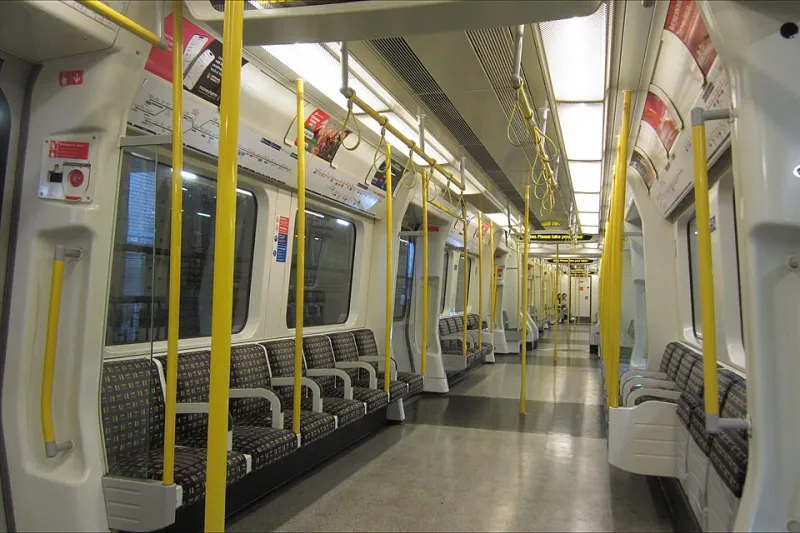
Photo: Bananaclippings, CC BY-SA 4.0, via Wikimedia Commons
The commute is one of the few reliable pockets of time in a working adult's day, yet it is also one of the easiest to waste. A train journey can become a scroll through social media; a bus ride can disappear into news alerts. For open learners, the opportunity is real but conditional. Travel time is not a miniature classroom. It is a set of short, interrupted and often uncomfortable moments that suit some kinds of study far better than others.
1. Audit the journey before choosing the course
Not all commutes are equal. A 40-minute train journey with a seat and a table is a different learning environment from a 12-minute standing bus ride. Before enrolling on anything, map the journey in detail: how long each segment lasts, whether a seat is likely, whether mobile signal holds and how much noise surrounds you.
The result is usually a mixture. A walk to the station, a standing wait on a platform, a seated train leg and a short bus at the other end. Each segment can support a different learning activity. The mistake is to assume that the whole journey can be used for one demanding task.
2. Put audio-first resources in the standing slot
Audio works well when hands and eyes are occupied. Open courses that provide lecture recordings, explainer podcasts or guided audio walkthroughs can fit a standing train or a brisk walk. The learner is not trying to read; they are listening for a single thread.
Use an active listening routine rather than passive playback. Before pressing play, note the question you want the audio to answer. After the journey, write one sentence in a notes app. If you cannot produce that sentence, the audio was background noise rather than study.
3. Use micro-study for the ten-minute gaps
Micro-study is not a lesser form of learning; it is a different unit of it. A platform wait is long enough for five flashcards, one definition or a single recap of yesterday's material. It is not long enough for a live seminar or a complex problem set.
Good micro-study tasks are closed and quick: a short quiz, a vocabulary drill, a diagram recall or a one-paragraph summary of a previous lesson. Keep a small set of these tasks ready so that the gap is used before the phone drifts towards passive scrolling.
4. Download before you leave the house
Offline access is the quiet foundation of commute learning. UK rail and bus routes still have blackspots, and a course that depends on live video will fail at the worst moment. Download readings, audio and short videos while on home Wi-Fi. Check that the platform allows offline viewing or that notes are stored locally.
Battery life is part of the same lesson. A long journey with a low battery turns a study plan into a search for a plug socket. Carry headphones, keep a charging cable and avoid choosing a commute course that depends on two hours of high-brightness video.
5. Build a commute-only notebook
A single notebook, physical or digital, should capture the commute curriculum. Record the date, the journey and three bullet points: what you listened to or read, one idea worth keeping and one question to follow up. This turns travel time into evidence.
The notebook also acts as a test. If a week of commuting produces no entries, the learning was probably not happening. The rule is simple: one journey, one sentence. That sentence is the difference between consuming content and studying it.
6. Protect against passive scrolling
Passive scrolling is not a moral failure; it is a design problem. The phone is built to offer novelty, and a tired commuter will take it. Counter this with friction. Move social apps off the home screen, use a focus mode during the journey, or create a commuting playlist that contains only course audio.
A useful distinction is between a learning commute and a news commute. Both can be valid, but they should not be confused. If the journey is designated for study, the first action on boarding should be to open the course, not the feed.
7. Match the format to the mode
Some free-course activities genuinely fit a commute; others do not.
- Walking or standing: audio lectures, oral rehearsal, language listening, one-question reflection.
- Bus or short train hop: flashcards, definitions, quick quizzes, review of yesterday's notes.
- Seated train with a table: reading, short video, structured note-making, planning the next study block.
- Platform wait: one micro-task, one recap, one sentence of evidence.
- What does not fit: live seminars, timed assessments, complex coding exercises, group work and anything that requires stable broadband and deep concentration.
The test is not whether the course is free. The test is whether the format survives the journey.
8. A realistic weekly template
A sustainable commute curriculum does not use every minute. It uses the segments that suit study and leaves the rest alone.
- Monday: 20 minutes of audio on the walk to the station.
- Tuesday: 15 minutes of flashcards on the bus.
- Wednesday: 30 minutes of reading on the seated train leg.
- Thursday: 20 minutes of audio review on the return journey.
- Friday: 10 minutes of notes and one follow-up question.
- Weekend: 45 minutes at home to consolidate the week's fragments.
That is roughly two hours and twenty minutes, not a second job. The weekend consolidation matters because commute learning is naturally fragmented. Without a short session to connect the pieces, the week becomes a pile of unrelated moments.
9. Count the invisible hours
Commute study is easy to undervalue because it leaves no obvious trace. Add it to the same record as other open learning: a simple monthly tally of journeys, topics and outputs. At a checkpoint, the learner can see whether the commute has become a genuine study route or merely a place where podcasts play.
For UK adults balancing work and family life, the commute will never replace a proper study block. It can, however, turn dead time into a steady second stream of learning. The difference lies in choosing the right format, preparing for the journey and refusing to let the phone decide what the journey is for.